


From Shankha Pola to Noa: Must-Have Bengali Bridal Jewellery for Your Wedding
A Bengali wedding is a beautiful blend of age-old traditions, vibrant rituals, and timeless elegance. Every detail of a Bengali bride’s attire, from her iconic red and white saree to her exquisite jewellery, reflects the rich cultural heritage of Bengal. Bridal jewellery is more than an adornment—it’s a symbol of love, blessings, prosperity, and the beginning of a new chapter.
Whether you’re preparing for your big day or exploring traditional Bengali bridal fashion, here’s a guide to the must-have jewellery pieces that complete a classic Bengali bridal look.
The Importance of Bengali Bridal Jewellery
Bengali bridal jewellery is deeply rooted in tradition and carries immense emotional value. Each ornament is associated with specific customs and is often gifted by family members as a token of love and blessings.
While today’s brides embrace contemporary designs, traditional jewellery remains an essential part of Bengali weddings, creating a perfect balance between heritage and modern elegance.
1. Shankha
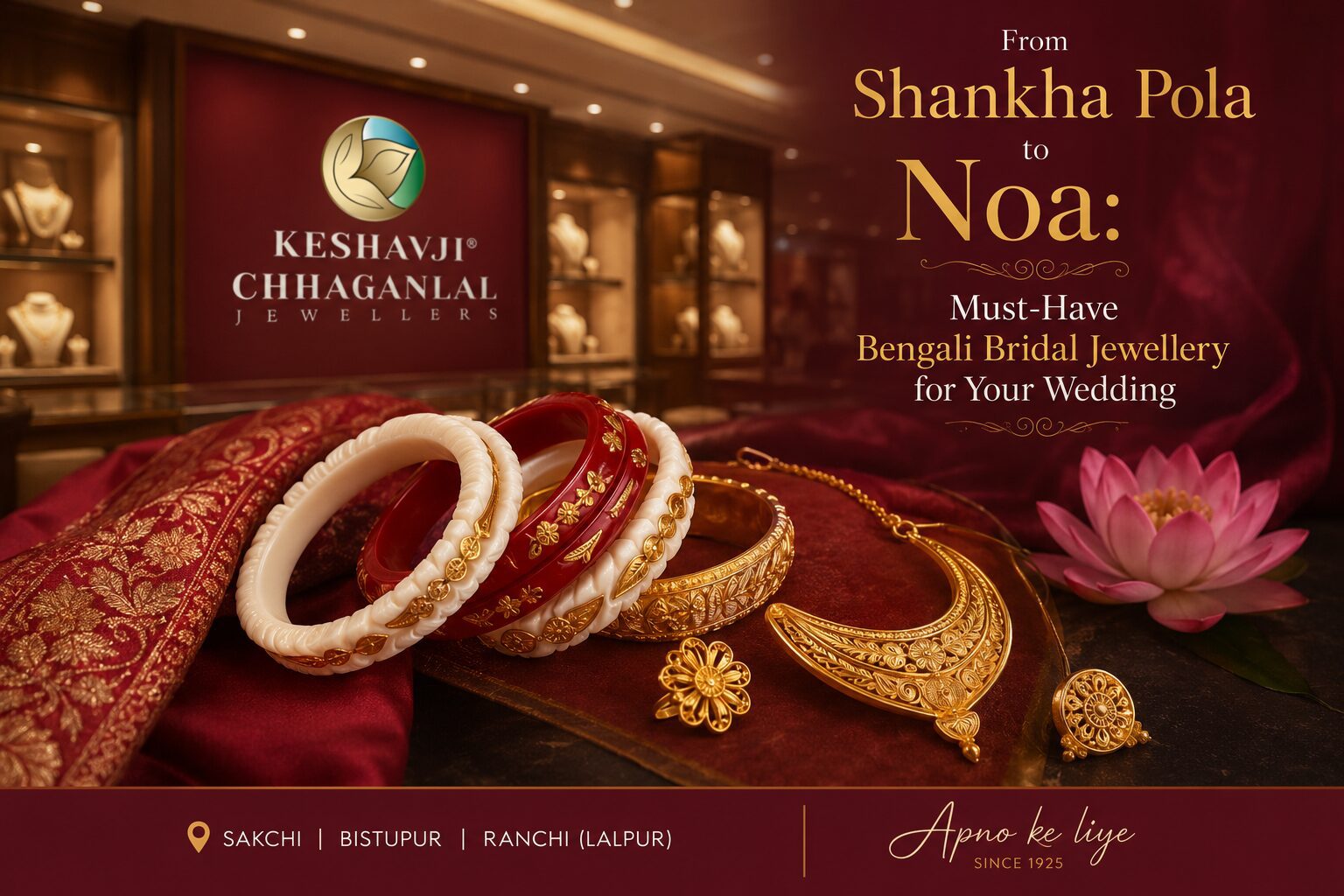
The Shankha is one of the most significant symbols of a married Bengali woman. Made from white conch shell, these bangles are traditionally worn after marriage and represent purity, happiness, and prosperity.
The Shankha is usually worn on both wrists and forms an indispensable part of a Bengali bride’s wedding attire.
2. Pola
Paired with the Shankha, the Pola consists of beautiful red coral bangles that symbolize good fortune, marital bliss, and a long, happy married life.
The combination of white Shankha and red Pola is instantly recognizable and holds deep cultural significance in Bengali traditions.
3. Noa
The Noa is an iron bangle, traditionally coated or embellished with gold, worn on the left wrist by married Bengali women. It symbolizes strength, protection, and the enduring bond of marriage.
Though simple in appearance, the Noa is among the most meaningful ornaments in Bengali bridal customs.
4. Tikli (Maang Tikka)
The Tikli, also known as the Bengali Maang Tikka, adorns the bride’s forehead and beautifully complements her traditional bridal hairstyle.
Available in classic gold, Kundan, Polki, and gemstone designs, the Tikli adds grace and elegance while completing the bridal ensemble.
5. Sita Haar
The Sita Haar is a long, elegant necklace that has been a hallmark of Bengali bridal jewellery for generations.
Its intricate craftsmanship and regal appearance make it a favourite choice for brides seeking a timeless traditional look.
Layering the Sita Haar with shorter necklaces creates a luxurious bridal style.
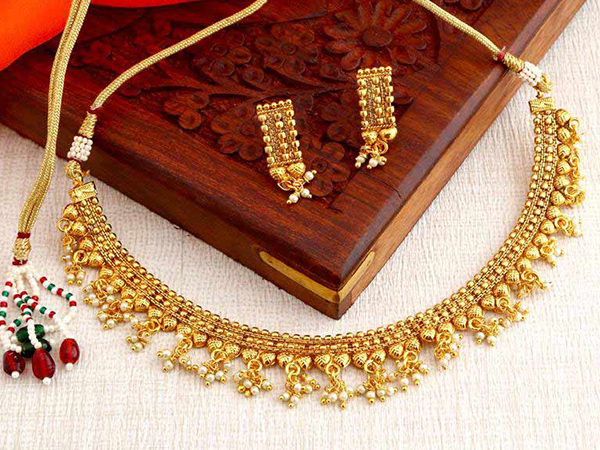
6. Choker Necklace
A beautifully crafted gold choker sits close to the neck and perfectly complements the Sita Haar.
Modern Bengali brides often choose antique gold, temple jewellery, or Kundan chokers to create a sophisticated layered look.
7. Jhumkas
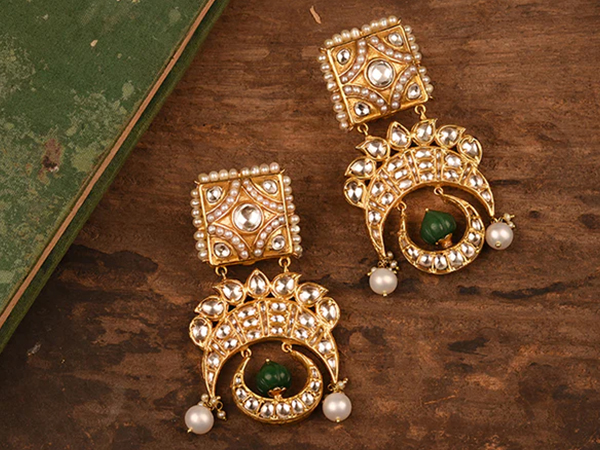
Traditional gold Jhumkas are a staple of Bengali bridal jewellery.
Whether featuring delicate filigree work, pearls, or gemstone embellishments, Jhumkas frame the face beautifully and enhance the bride’s overall appearance.
8. Nath (Nose Ring)
The Nath adds a touch of regal elegance to the bridal look.
Many Bengali brides opt for classic gold Nath designs, while others choose styles adorned with pearls or gemstones for added grandeur.
9. Chur and Gold Bangles
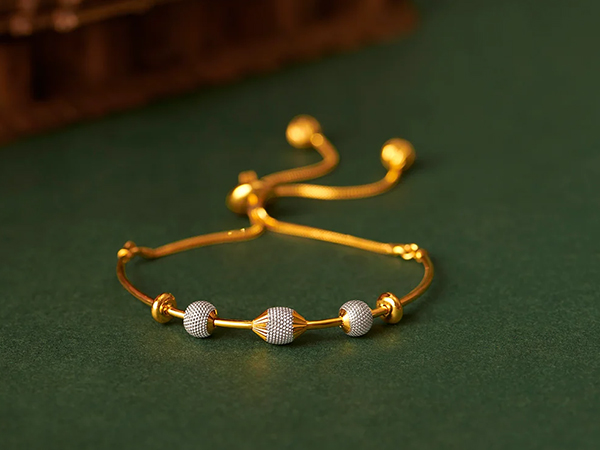
Apart from the Shankha and Pola, Bengali brides often wear multiple gold bangles, Kadas, and bracelets that symbolize prosperity and celebrate the joyous occasion.
Layering various bangle designs creates a rich and festive appearance.
10. Kamarbandh
The Kamarbandh, or waist belt, adds grace and elegance to the bridal saree while accentuating the bride’s silhouette.
Available in antique, temple, and gemstone-studded designs, it beautifully completes the traditional wedding attire.
11. Payal and Toe Rings
Elegant Payal (anklets) and Bichiya (toe rings) complete the Bengali bridal look.
Silver anklets with intricate craftsmanship remain popular choices, adding charm to every bridal step.
Choosing the Perfect Bengali Bridal Jewellery
When selecting your bridal jewellery, keep these tips in mind:
- Match your jewellery with your bridal saree and overall wedding theme.
- Balance statement pieces with lighter accessories for comfort.
- Choose timeless designs that can be worn beyond your wedding day.
- Ensure every gold ornament is BIS Hallmarked for guaranteed purity.
- Purchase from a trusted jeweller known for quality craftsmanship and transparent pricing.
Modern Trends in Bengali Bridal Jewellery
Today’s Bengali brides are blending traditional aesthetics with contemporary elegance.
Popular trends include:
- Antique gold bridal sets
- Lightweight bridal jewellery
- Kundan and Polki necklaces
- Layered gold necklaces
- Temple jewellery
- Floral-inspired motifs
- Convertible bridal jewellery
- Diamond accents with traditional gold designs
These styles preserve cultural heritage while allowing brides to express their unique personality.
Caring for Your Bridal Jewellery
Your bridal jewellery deserves lifelong care.
Here are a few simple tips:
- Store each piece separately in soft-lined jewellery boxes.
- Clean gold jewellery gently with a soft cloth after use.
- Keep jewellery away from perfumes, cosmetics, and harsh chemicals.
- Schedule professional cleaning and inspection periodically.
- Preserve invoices and hallmark certificates for future reference.
Why Buy Bridal Jewellery from a Trusted Jeweller?
Bridal jewellery is one of the most meaningful investments you’ll make. Choosing a trusted jeweller ensures:
- BIS Hallmarked gold jewellery
- Certified diamond jewellery
- Transparent pricing
- Expert craftsmanship
- Wide bridal collections
- Customization options
- Reliable after-sales service
Buying from a reputable jeweller gives you confidence that every ornament is crafted with authenticity, quality, and care.
Conclusion
From the sacred Shankha, Pola, and Noa to the elegant Tikli, Sita Haar, and traditional gold bangles, every piece of Bengali bridal jewellery carries deep cultural meaning and timeless beauty.
Whether you dream of a classic traditional look or a modern interpretation of Bengali bridal fashion, choosing the right jewellery will make your wedding day even more memorable.
At Keshavji Chhaganlal Jewellers, we are honoured to be part of your special journey. Explore our exquisite collection of handcrafted gold, diamond, and bridal jewellery, thoughtfully designed to celebrate traditions while embracing modern elegance.
Frequently Asked Questions (FAQs)
What are Shankha and Pola?
Shankha are white bangles made from conch shell, while Pola are red coral bangles. Together, they symbolize marriage, prosperity, and happiness in Bengali tradition.
What is the significance of the Noa?
The Noa is a traditional iron bangle, often covered with gold, worn by married Bengali women. It represents strength, protection, and the lifelong bond of marriage.
What is a Sita Haar?
A Sita Haar is a long traditional gold necklace commonly worn by Bengali brides. It is often layered with shorter necklaces to create a regal bridal look.
Which gold purity is ideal for bridal jewellery?
Traditional bridal jewellery is generally crafted in 22-karat gold, offering excellent purity and durability. Always choose BIS Hallmarked jewellery.
How early should I shop for my bridal jewellery?
It’s recommended to begin shopping at least three to six months before the wedding to allow time for customization, matching with outfits, and any alterations.
Can I combine traditional and modern jewellery styles?
Yes. Many brides pair traditional Bengali ornaments like the Shankha, Pola, and Sita Haar with contemporary chokers, diamond jewellery, or gemstone pieces to create a personalized bridal look.